


Pharmacogenetic testing examines a person's genetic makeup to predict how medicines will act in their body. By identifying gene variants linked to drug metabolism, drug action and side effects, it helps doctors choose the most effective and safest treatment and keep side effects to a minimum. It is a core part of personalised medicine.
What pharmacogenetics studies
Within personalised medicine, pharmacogenetics looks at why people respond differently to the same medication because of differences in their genes. Genetic variation in the systems that metabolise a drug, or in the targets through which it works, can change how well that drug works and how likely it is to cause adverse effects in some people. Certain genetic tests now in use can flag, in advance, situations that would lead to unnecessary treatment or a high risk of side effects.
How it works in our laboratory
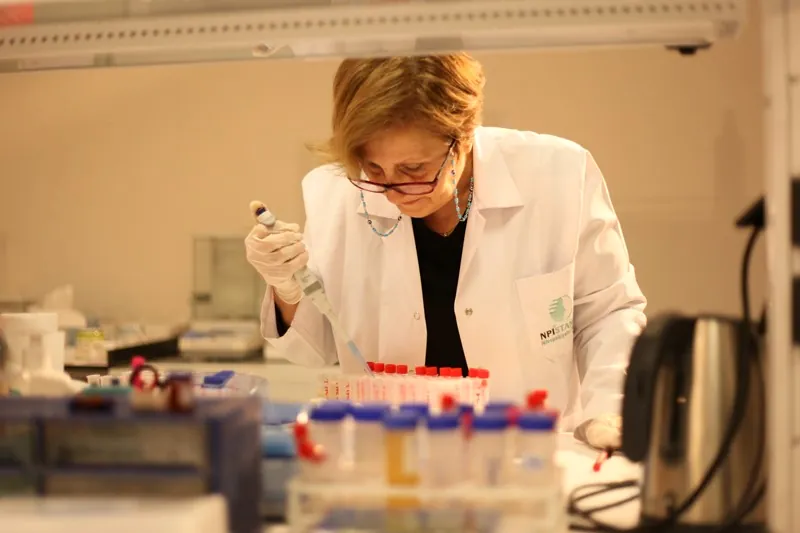
The Clinical Pharmacogenetics Laboratory isolates DNA or RNA from blood or other tissue samples taken from the patient. These samples are then used either for genotyping or to measure gene expression levels.
For genotyping, the laboratory uses:
- Conventional PCR (polymerase chain reaction)
- Restriction fragment length polymorphism (RFLP) analysis
- Sequencing
- Real-time PCR, for more precise analyses
Genotyping sometimes complements phenotypic studies and sometimes comes before them. Establishing the link between genotype and phenotype allows the team to build a treatment programme that is more effective, reaches results in a shorter time and keeps side effects to a minimum.
Main genes analysed
- CYP2D6
- CYP2C9
- CYP2C19
- CYP1A2
- CYP3A4
- 5HTT polymorphisms
- COMT polymorphisms
Why personalised prescribing matters
Today, medicines are generally prescribed in one of two ways:
- Trial and error: a drug is given until one shows an effect.
- Protocol-based approach: a diagnosis is made first, and drugs are then given according to the decision tree in a treatment protocol.
Pharmacogenetic studies add two key clinical applications:
- Assessing drug response: identifying which patients are likely to respond well to a given medication and which are not, so that effective regimens can be personalised.
- Preventing side effects: identifying beforehand the patients likely to experience side effects, which lowers that risk and makes treatment safer.
Laboratory tests support both goals. Therapeutic drug monitoring (TDM) measures how much of a medication is in the blood, which shows how a person's body actually processes it; phenotyping can also be carried out with a "probe drug". Taken together, pharmacogenetics uses a patient's genetic makeup to predict drug responses, interactions and side effects, and so helps shape personalised treatment.
In Türkiye, therapeutic drug monitoring is limited and relies on non-specific methods. Pharmacogenetics aims to make drug treatment more effective and safer by moving personalised treatment forward, and progress in this field can support better disease management and improved treatment response.
What pharmacogenetic tests are used for
- Predicting drug response: checking whether a medication suits a person's genetic profile. Drugs can act differently in each person, and testing helps predict how a drug will work for that individual's condition.
- Adjusting the dose: genetic differences influence how drugs are metabolised, so testing can be critical in finding the right dose. Matching the dose to the genetic profile can make treatment more effective and reduce side effects.
- Reducing side effects: some side effects stem from genetic variation. Testing can predict which ones a person is at risk of and help make treatment safer.
- Investigating treatment resistance: when a patient does not respond to certain medications, testing can help reveal why and point to alternative options.
- Assessing drug interactions: testing can help evaluate how several medications taken at the same time interact in the body, which matters for the safety and effectiveness of combinations.
- Drug development and selection: pharmacogenetic studies are used in developing new drugs and in deciding whether they suit patients with particular genetic profiles, helping to design more targeted treatments.
Brochure: Personalised Medicine
TDM molecule list
The table below lists the active substances covered by therapeutic drug monitoring (TDM), with each drug's half-life, therapeutic range, alarm level and the level of recommendation for TDM.
Source: AGNP Consensus Guidelines for Therapeutic Drug Monitoring in Neuropsychopharmacology (Hiemke et al., Pharmacopsychiatry 2018;51:9–62). The ranges are for clinicians and are not meant for patients to interpret their own results; please discuss your results with your doctor.
| No. | Active substance | Half-life (t½), hours–days | Therapeutic range | Alarm level | Level of recommendation for TDM |
|---|---|---|---|---|---|
| 1. | Alprazolam | 12–15 hours | 20–40 ng/mL | 100 ng/mL | 3 |
| 2. | Acamprosate | 3–33 hours | 250–700 ng/mL | 1000 ng/mL | 3 |
| 3. | Amisulpride | 12–20 hours | 100–320 ng/mL | 640 ng/mL | 1 |
| 4. | Amitriptyline + Nortriptyline | 10–28 hours + 18–44 hours | 80–200 ng/mL | 300 ng/mL | 1 |
| 5. | Aripiprazole | 60–80 hours | 100–350 ng/mL | 1,000 ng/mL | 2 |
| 6. | Asenapine | 13–39 hours | 1–5 ng/mL | 10 ng/mL | 4 |
| 7. | Atomoxetine | 2–5 hours | 200–1,000 ng/mL | 2,000 ng/mL | 3 |
| 8. | Bupropion + Hydroxybupropion | 1–15 hours + 17–47 hours | 850–1,500 ng/mL | 2,000 ng/mL | 2 |
| 9. | Buspirone | 1–5 hours | 1–4 ng/mL | 30 ng/mL | 3 |
| 10. | Carbamazepine | 10–20 hours | 4–12 µg/mL | 20 µg/mL | 1 |
| 11. | Carbamazepine-10,11-epoxide | - | 0.4–4 µg/mL | 4 µg/mL | - |
| 12. | Chlorpromazine | 15–30 hours | 30–300 ng/mL | 600 ng/mL | 2 |
| 13. | Citalopram | 38–48 hours | 50–110 ng/mL | 220 ng/mL | 1 |
| 14. | Clomipramine + N-desmethylclomipramine | 16–60 hours | 230–450 ng/mL | 450 ng/mL | 1 |
| 15. | Clonazepam | 19–40 hours | 4–80 ng/mL | 100 ng/mL | 3 |
| 16. | Clozapine + Norclozapine | 12–16 hours | 350–600 ng/mL | 1,000 ng/mL | 1 |
| 17. | DDTC-ME (disulfiram metabolite diethylthiomethylcarbamate methyl ester) | 6–9 hours | 270–310 ng/mL | 500 ng/mL | 3 |
| 18. | Diazepam + Nordazepam | 24–48 hours | 100–2,500 ng/mL | 3,000 ng/mL | 4 |
| 19. | Donepezil | 70–80 hours | 50–75 ng/mL | 75 ng/mL | 2 |
| 20. | Duloxetine | 9–19 hours | 30–120 ng/mL | 240 ng/mL | 2 |
| 21. | Escitalopram | 27–32 hours | 15–80 ng/mL | 160 ng/mL | 2 |
| 22. | Fluoxetine + Norfluoxetine | 4–6 days | 120–500 ng/mL | 1,000 ng/mL | 3 |
| 23. | Flupenthixol | 20–40 hours | 0.5–5 ng/mL | 15 ng/mL | 2 |
| 24. | Fluphenazine | 16 hours | 1–10 ng/mL | 15 ng/mL | 1 |
| 25. | Fluvoxamine | 21–43 hours | 60–230 ng/mL | 500 ng/mL | 2 |
| 26. | Gabapentin | 5–7 hours | 2–20 µg/mL | 25 µg/mL | 3 |
| 27. | Haloperidol | 12–36 hours | 1–10 ng/mL | 15 ng/mL | 1 |
| 28. | Imipramine + Desipramine | 11–25 hours + 15–18 hours | 175–300 ng/mL | 300 ng/mL | 1 |
| 29. | Lacosamide | 10–15 hours | 1–10 µg/mL | 20 µg/mL | 3 |
| 30. | Lamotrigine | 14–104 hours | 1–15 µg/mL | 20 µg/mL | 2 |
| 31. | Levetiracetam | 6–8 hours | 20–40 µg/mL | 50 µg/mL | 4 |
| 32. | Lorazepam | 12–16 hours | 30–100 ng/mL | 300 ng/mL | 4 |
| 33. | Maprotiline | 20–58 hours | 75–130 ng/mL | 220 ng/mL | 2 |
| 34. | Memantine | 60–100 hours | 90–150 ng/mL | 300 ng/mL | 3 |
| 35. | Metformin | 6.2 hours | 1–2 µg/mL | 5 µg/mL | - |
| 36. | Methylphenidate | 2 hours | 6–26 ng/mL | 50 ng/mL | 3 |
| 37. | Mianserin | 14–33 hours | 15–70 ng/mL | 140 ng/mL | 3 |
| 38. | Milnacipran | 5–8 hours | 100–150 ng/mL | 300 ng/mL | 2 |
| 39. | Mirtazapine | 20–40 hours | 30–80 ng/mL | 160 ng/mL | 2 |
| 40. | Moclobemide | 2–7 hours | 300–1,000 ng/mL | 2,000 ng/mL | 3 |
| 41. | Modafinil | 10–12 hours | 1,000–1,700 ng/mL | 3,400 ng/mL | 3 |
| 42. | Naltrexone + 6β-naltrexol | 2–5 hours + 7–13 hours | 25–100 ng/mL | 200 ng/mL | 2 |
| 43. | Olanzapine | 30–60 hours | 20–80 ng/mL | 100 ng/mL | 1 |
| 44. | Opipramol | 11 hours | 50–500 ng/mL | 1000 ng/mL | 3 |
| 45. | Oxcarbazepine (10-hydroxycarbazepine) | 10–20 hours | 10–35 µg/mL | 40 µg/mL | 2 |
| 46. | Paliperidone (9-hydroxyrisperidone) | 17–23 hours | 20–60 ng/mL | 120 ng/mL | 2 |
| 47. | Paroxetine | 12–44 hours | 20–65 ng/mL | 120 ng/mL | 3 |
| 48. | Pimozide | 23–43 hours | 15–20 ng/mL | 20 ng/mL | 3 |
| 49. | Pramipexole | 8–12 hours | 0.4–1.2 ng/mL | 15 ng/mL | 3 |
| 50. | Pregabalin | 5–7 hours | 2–5 µg/mL | 10 µg/mL | 3 |
| 51. | Quetiapine | 6–13 hours | 100–500 ng/mL | 1,000 ng/mL | 2 |
| 52. | Reboxetine | 13–30 hours | 60–350 ng/mL | 700 ng/mL | 3 |
| 53. | Risperidone + 9-hydroxyrisperidone | 2–4 hours + 17–23 hours | 20–60 ng/mL | 120 ng/mL | 2 |
| 54. | Rivastigmine | 1–2 hours | 8–20 ng/mL | 40 ng/mL | 3 |
| 55. | Sertindole | 55–90 hours | 50–100 ng/mL | 200 ng/mL | 2 |
| 56. | Sertraline | 22–36 hours | 10–150 ng/mL | 300 ng/mL | 2 |
| 57. | Sulpiride | 8–14 hours | 200–1,000 ng/mL | 1,000 ng/mL | 2 |
| 58. | Tianeptine | 2.5–3 hours | 30–80 ng/mL | 160 ng/mL | 3 |
| 59. | Topiramate | 19–23 hours | 2–10 µg/mL | 16 µg/mL | 3 |
| 60. | Trazodone | 4–11 hours | 700–1,000 ng/mL | 1,200 ng/mL | 2 |
| 61. | Trifluoperazine | - | 1–2.3 ng/mL | - | - |
| 62. | Venlafaxine + O-desmethylvenlafaxine (ODV) | 3–7 hours + 10–17 hours | 100–400 ng/mL | 800 ng/mL | 2 |
| 63. | Valproic acid | 17–30 hours | 50–100 µg/mL | 120 µg/mL | 1 |
| 64. | Vortioxetine | 57–66 hours | 10–40 ng/mL | 80 ng/mL | 2 |
| 65. | Ziprasidone | 4–8 hours | 50–200 ng/mL | 400 ng/mL | 2 |
| 66. | Zolpidem | 1–4 hours | 80–160 ng/mL | 320 ng/mL | 4 |
| 67. | Zuclopenthixol | 15–25 hours | 4–50 ng/mL | 100 ng/mL | 3 |
Used in the assessment of
- Depression May help choose the medicine or dose
- Bipolar disorder May help choose the medicine or dose
- Schizophrenia and psychosis May help choose the medicine or dose