
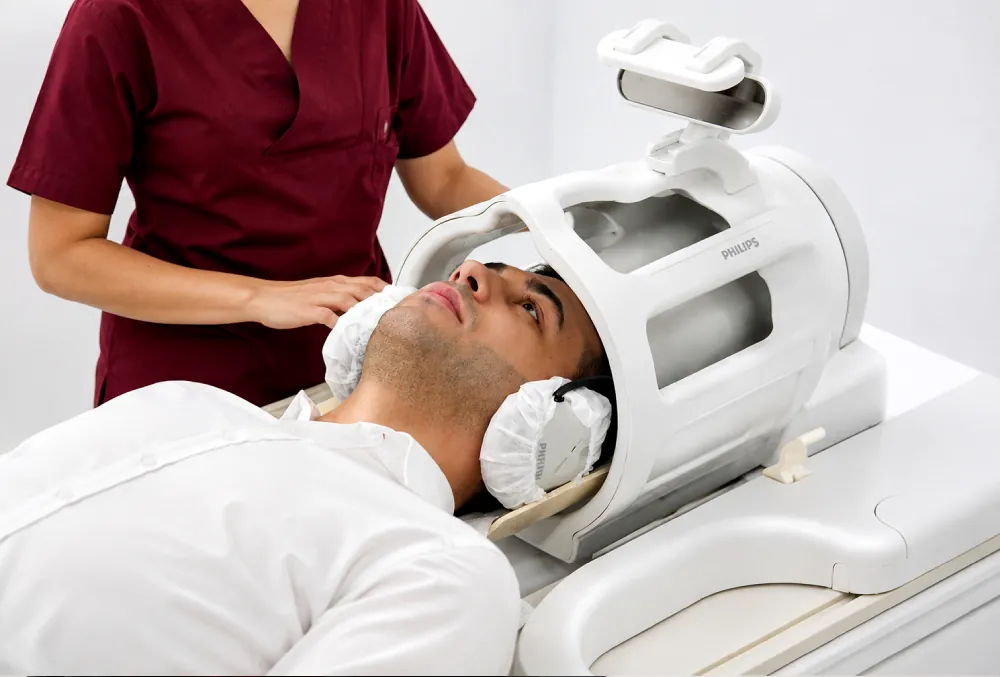
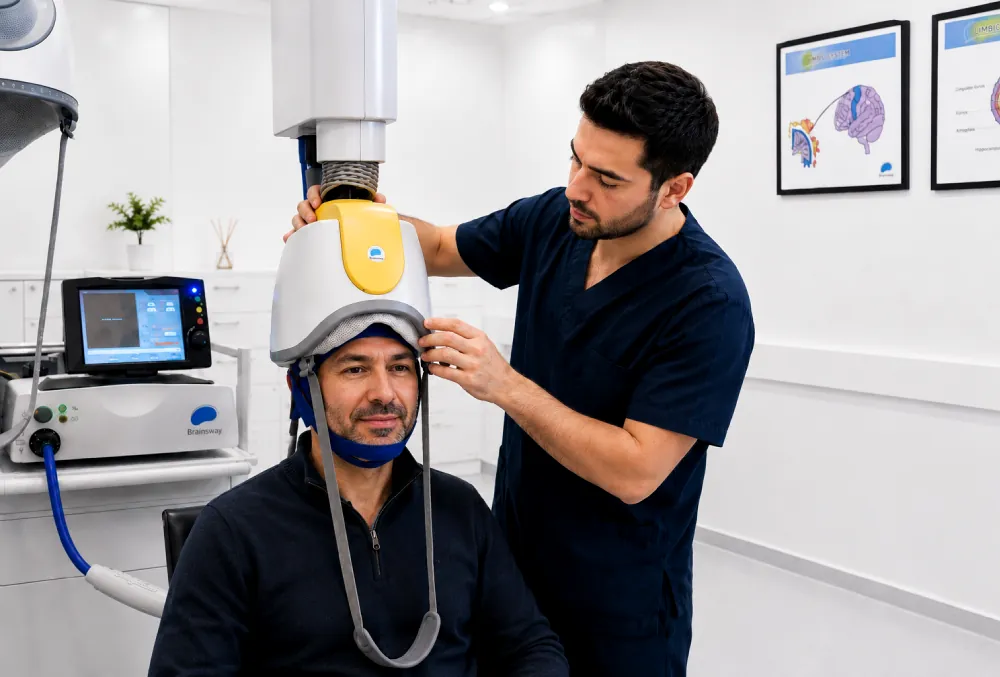
Transcranial magnetic stimulation (TMS) is one of the magnetic brain stimulation methods offered by the Neuromodulation Unit at NPİSTANBUL Hospital. It acts on selected regions of the brain to support the treatment of psychiatric and neuropsychiatric conditions. At NPİSTANBUL, TMS is planned on a personalised basis and sits within a wider set of tools for assessing and supporting brain function.
The Neuromodulation Unit at NPİSTANBUL
The unit is a multidisciplinary reference centre that brings together advanced technologies for two purposes: evaluating how the brain is working and supporting its function. Specialists from four disciplines plan care jointly:
- Psychiatry
- Neurology
- Neurosurgery
- Psychology
Together they build personalised, comprehensive treatment plans around each patient's clinical needs. Every procedure follows scientific protocols, ethical principles and patient-safety standards.
Who it may help
Neuromodulation is used across several clinical fields. The unit approaches it broadly, covering psychiatric, cognitive and neurological processes. Suitability is always decided after a specialist assessment.
Psychiatric conditions
After an expert evaluation, neuromodulation may be considered as a supportive treatment option for:
- Depression
- Anxiety disorders
- Obsessive-compulsive symptoms
- Trauma- and stress-related conditions
- Mood swings
- Sleep-related psychiatric problems
Cognitive and neuropsychiatric complaints
Where it is clinically appropriate, neuromodulation may also address problems with the brain's cognitive functions, such as:
- Forgetfulness and memory problems
- Difficulty with attention and concentration
- Learning difficulties
- Mental slowing and reduced cognitive performance
- Mild cognitive impairment
Neurological conditions
The unit's neuromodulation and neurophysiological methods can serve diagnostic and supportive purposes in:
- Movement disorders
- Certain clinical conditions associated with epilepsy
- Neuromuscular transmission disorders
- Parkinson's disease and similar neurological conditions
Functional and neurophysiological assessment
Some applications are not treatments in themselves. Instead, they are used for diagnosis, monitoring and planning, for example to:
- Evaluate communication between nerves and muscles
- Analyse brain waves
- Track the response to treatment objectively
EMG, QEEG and similar methods are important tools for this work.
Methods used in the unit
Assessing brain function
- Topographic brain mapping (QEEG/TBM): brain-wave analysis that describes the individual's brain function and helps guide treatment planning.
- Electromyography (EMG): a neurological diagnostic test that evaluates muscle and nerve conduction.
Magnetic and electrical brain stimulation
- Personalised TMS (transcranial magnetic stimulation)
- Deep TMS (deep transcranial magnetic stimulation)
- Theta burst stimulation (TBS)
- tDCS and CES stimulation therapies
- ECT under anaesthesia
By targeting specific brain regions, these methods help support the treatment of psychiatric and neuropsychiatric conditions.
Other neuromodulation and adjunctive methods
- Transcranial pulse stimulation (TPS)
- Transcutaneous vagus nerve stimulation (tVNS)
- Transcranial brain photobiomodulation (t-FNS)
- Neurobiofeedback (NBF)
- The Tomatis method
These approaches may be used to support stress management, cognition, learning, emotional balance and mindfulness.
Advanced and surgical approaches
- Functional neurosurgery (brain pacemaker): an advanced option, considered after expert evaluation, for certain neurological and psychiatric conditions that have not responded to medication.
- Neuronavigation-assisted procedures: allow more precise and safer interventions in targeted areas of the brain.
Our principles of care
To protect and support brain health, the Neuromodulation Unit at NPİSTANBUL Hospital puts the following first:
- Patient safety
- Scientific accuracy
- Ethical values
- A personalised approach
What the evidence says
TMS is an established treatment for treatment-resistant depression and is approved for OCD in several countries. It is not suitable for everyone; a psychiatrist decides after assessment.
Research use, not an established indication: Anxiety and panic disorders, Trauma and PTSD, Bipolar disorder, Parkinson’s disease and movement disorders
Used for
Programmes that include it
- TMS and D-TMS treatment course Expected stay: 15–30 days
- Day treatment programme Expected stay: Weekly
Often combined with
- Therapy Psychotherapy Evidence-based talking therapies, in person during your stay and online after you return home.
Specialists
- Prof. Dr. K. Nevzat Tarhan Psychiatry
- Prof. Dr. Hüsnü Erkmen Psychiatry
- Prof. Dr. Sermin Kesebir Psychiatry
- Prof. Dr. Gül Eryılmaz Psychiatry
- Prof. Dr. Habib Erensoy Psychiatry
- Prof. Dr. Oğuz Tan Psychiatry