

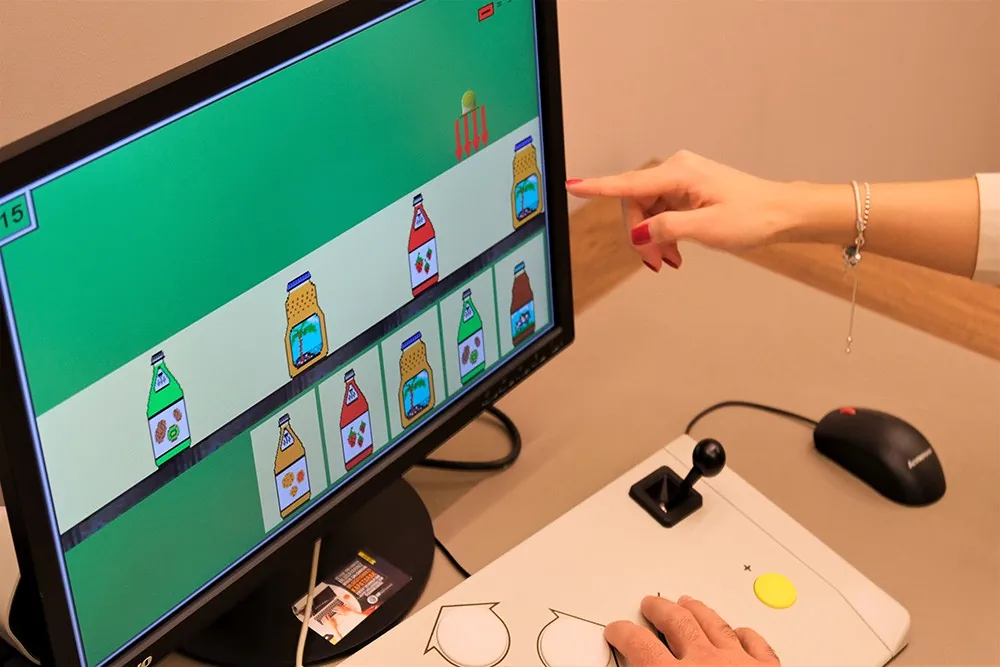
Neuropsychological assessment uses standardised psychological tests to measure how the brain supports thinking, behaviour and emotion. The results give concrete information about a person's abilities and performance, show where support is needed and help specialists choose the most suitable treatment. At NPİSTANBUL, testing is carried out by trained psychologists and interpreted within a multidisciplinary team.
What neuropsychology examines
Neuropsychology studies the relationship between the brain and behaviour. The neuropsychology unit uses a range of psychological assessment methods related to brain function and psychological state.
Psychological tests help to:
- Understand the individual and gather concrete data on their abilities and performance
- Identify areas that need development and plan interventions for them
- Make decisions about careers, job placement, education and training less error-prone
- Clarify a person's current condition so that the most appropriate treatment can be chosen
What makes a test reliable
For results to be meaningful and accurate, a test must be standardised, have established norms and have passed validity and reliability studies. It must also be given by a psychologist with specific test training and experience.
Interpreting the data correctly, drawing meaningful conclusions and turning them into recommendations are just as important. A well-trained specialist can judge the technical quality of each test and select those that best fit the purpose and the person, with the strongest psychometric properties. To support this, the unit continuously follows the scientific literature and keeps its knowledge up to date.
For international patients: most of the tests below are Turkish adaptations with Turkish norms. Some can be given in English (ask us which ones); when a test is given through an interpreter, the results are interpreted with caution, because norms for your language may not exist.
Types of psychological tests
Tests fall into two broad groups: objective (psychometric) and subjective (projective). By content, they are grouped under three headings:
- General intelligence
- Abilities and skills
- Personality tests
Tests can be given in different formats: paper-and-pencil, face to face with a tester and, increasingly, on a computer.
Computerised clinical diagnostic tests
Vienna Test System
The Schuhfried diagnostic scales in the Vienna Test System are administered on a computer. The system includes cognitive tests of perception, comprehension, understanding, reasoning, intelligence, memory and attention.
What is the COGBAT test?
COGBAT (Cognitive Basic Assessment) is part of the Vienna Test System. It is a computerised test battery that assesses the cognitive status of people with neurological and/or mental disorders across three domains:
- Attention
- Memory
- Executive functions
COGBAT subtests:
- TMT-L BTA – information processing speed
- WAF intrinsic – alertness
- WAF cross-modal – divided attention
- FGT RLVA – figural long-term memory
- FGT RKVA – figural short-term memory
- FGT LS – total learning, figural
- FGT RW – correct recognition
- TMT-L BTB – cognitive flexibility
- NBV – verbal working memory
- TOL-F – planning ability
- INHIB – response inhibition
COGNIPLUS cognitive rehabilitation
When COGBAT reveals difficulties, the COGNIPLUS system is used for cognitive rehabilitation. It is a computerised training battery with modules matching each dimension that COGBAT measures, covering attention, executive functions, memory, spatial processing and visuomotor skills.
A thorough assessment before training shows a person's strengths and the areas to improve. Pinpointing exactly what needs training makes the programme effective and efficient. Progress is then measured not by subjective impression but with parallel forms of the original COGBAT tests.
COGNIPLUS training modules:
- ALERT – attention / arousal
- CODING – working memory / spatial coding
- DATEUP – working memory / updating
- DIVID – attention / divided attention
- FOCUS – attention / focus
- HIBIT-R – executive functions / response inhibition
- NAMES – long-term memory
- NBACK – working memory / tracking ability
- PLAND – executive functions / planning and action skills
- ROTATE – spatial processing
- SELECT – attention / selective attention
- SPACE – attention / visual-spatial attention
- SPEED – information processing speed
- VIG – attention / vigilance / sustained attention
- VISMO – visual-motor coordination
- VISP – working memory / recall
Where is COGBAT available?
Other institutions in Türkiye use the Vienna Test System, mainly for psychotechnical or clinical assessments. COGBAT is the most up-to-date version of this system, and NPİSTANBUL is the first institution to have implemented it.
What matters most is not the score on any single test but a clinical evaluation of the person's needs by a multidisciplinary team of neurology, psychiatry and psychology specialists. This is the approach used across our hospital and outpatient clinics.
Other Vienna Test System tests
- SPM – Raven's Standard Progressive Matrices (logical reasoning test)
- CPM – Raven's Coloured Progressive Matrices (logical reasoning test)
- COG – Cognitrone (attention and concentration test)
- DAUF – Sustained Attention Test
- NVLT – Nonverbal Learning Test
T.O.V.A. (Test of Variables of Attention)
T.O.V.A. is a computerised continuous performance test of attention and impulsivity. It does not depend on language and has normative data for ages 4–80. It consists of two 10.8-minute sections, with a total test time of 21.6 minutes.
It is used:
- To assess attention
- To measure the response after a medication is given
- To compare responses to different doses and find the optimal dose
- To measure long-term response to treatment
- As part of a cognitive check-up
General intelligence tests
- Wechsler Intelligence Scale for Children (WISC-R)
- Wechsler Adult Intelligence Scale (WAIS)
- CAS Test (Cognitive Assessment System)
- Porteus Maze Test
- Peabody Picture Vocabulary Test
- Alexander Practical Ability Test
- Cattell Intelligence Test
- Chapuis Labyrinths Test
- Stanford-Binet Intelligence Test
- Goodenough Intelligence Test
Personality tests
- MMPI (Minnesota Multiphasic Personality Inventory)
- Rorschach (Inkblot Test)
- TAT (Thematic Apperception Test)
- CAT (Children's Apperception Test)
- Louisa Duss (Psychoanalytic Story Test)
- Beier Sentence Completion Test
- Goodenough-Harris Draw-a-Person Test
Psychometric and clinical tests
- Behavioral Assessment Scale for Children and Adolescents Aged 4–18
- ADÖ Family Assessment Scale
- AGTE (Ankara Developmental Screening Inventory)
- Interpersonal Relationships Test
- Anxiety Sensitivity Scale
- Separation Anxiety Symptom Inventory
- Addiction Severity Index (ASI)
- Bar-On Emotional Intelligence Test
- Barratt Impulsiveness Scale
- Beck Anxiety Inventory
- Beck Cognitive Insight Scale
- Beck Depression Inventory
- Beck Scale for Suicide Ideation
- Beck Hopelessness Scale
- Body Image Scales
- Benton Face Recognition Test
- Benton Visual Memory Test
- Bender-Gestalt Test
- Cognitive Emotion Regulation Questionnaire (CERQ)
- Burdon Attention Test (ages 10–20)
- CAPS – Clinician-Administered PTSD Scale
- C. McHower
- Sexual Life Assessment Scales (Male)
- Conners Forms
- COPE – Coping Attitudes Assessment Scale
- Social Anxiety Scale for Children
- Childhood Depression Scale
- Childhood Trauma Scale
- Multidimensional Jealousy Scale
- Multidimensional Perfectionism Scale
- Multidimensional Anger Scale
- Multiple Intelligence Inventory
- Modified Early Childhood Autism Screening Scale
- Denver Developmental Test
- Dissociative Experiences Scale (DES)
- DSM-IV-Based Adult ADHD Diagnostic and Assessment Inventory
- Emotional Expression Level Scale
- Emotional Expression Scale
- Difficulties in Emotion Regulation Scale (DERS)
- Mood Disorders Scale
- Emotional Intelligence Assessment Scale
- Thought Control Questionnaire
- Parental ECRO (Short Form)
- Edinburgh Handedness Inventory
- Mini-Mental State Examination for the Illiterate
- Empathy Scale (Baron-Cohen, Cambridge Behaviour Scale)
- Empathic Disposition Scale
- Adult Attachment Style Scale
- Fagerström Test for Nicotine Dependence
- Dysfunctional Attitudes Scale (DAS)
- Frontal Behavioral Inventory (FBI)
- Frostig Visual Perception Test
- Geriatric Depression Scale
- Gesell Developmental Figures Test
- Gülhane Aphasia Test
- Hamilton Depression Scale
- Insight Assessment Scale
- Relationship Status Assessment Scales
- Internet Addiction Scale
- IRDA
- Marking Test
- Kent E.G.Y.
- Short Cognitive Examination Scale (KKM)
- Short Mental Status Examination (STMS)
- Brief Psychiatric Rating Scale (BPRS)
- Speech Profile (intensity, fluency tests and sample collection)
- Kuder Interest Test for Children and Adolescents
- Kuder Interest Test for Adults
- LD Battery (Learning Disorders – Dyslexia Battery)
- Liebowitz Social Phobia Symptom Scale
- Maternal Attachment Scale
- Metacognitions Questionnaire (MCQ)
- Michigan Alcoholism Screening Test (MAST)
- Temperament and Character Inventory (TCI)
- MMSE (Mini-Mental State Examination)
- Narcissistic Personality Inventory
- Negative Thought Repetition Beliefs Scale (NBRS)
- NKÖ (Negative Cognition Scale)
- Standard Neuropsychological Assessment Battery
- Neuropsychological Assessment – Memory-Focused
- Neuropsychological Assessment – Language-Focused
- Neuropsychological Assessment – Executive Function-Focused
- Neuropsychological Assessment – Visuospatial Function-Focused
- OKHT – School Readiness Test
- Autism Spectrum Questionnaire
- Autism Screening Scale
- PANAS (Positive and Negative Affect Scale)
- Panic and Agoraphobia Scale
- PARI – Family Life and Parenting Attitudes Scale
- PBQ-S Personality Beliefs Scale (Short Form)
- Peabody Receptive Language Test (ages 4–12)
- Penn Alcohol Craving Scale
- PIL – Purpose in Life Test
- Positive Thought Repetition Beliefs Scale (PBRS)
- Positive and Negative Syndrome Scale (PANSS)
- Psychological Resilience Scale
- Romantic Jealousy Scale
- Ruminative Thinking Style Scale
- SCID-II (Structured Clinical Interview for DSM Personality Disorders)
- SCL-90-R
- Exam Attitude Inventory
- Somatization Scale
- Somatoform Dissociation Questionnaire (SDQ)
- Social Functioning Scale
- Social Problem-Solving Inventory – Short Form (SPSI-SF)
- Verbal Memory Test
- Stress Resilience Scale
- Stroop Test
- TCI Scale
- Treatment Motivation Questionnaire (TMQ)
- Toronto Alexithymia Scale (TAS-20)
- Post-Traumatic Cognitions Inventory
- Post-Traumatic Stress Diagnostic Scale (TSSTÖ)
- Insomnia Severity Scale
- WAIS Memory Test
- Wiesbaden Inventory for Positive Psychotherapy and Family Therapy (WIPPF)
- Wisconsin Card Sorting Test (WCST)
- Yale-Brown Obsessive Compulsive Scale (Y-BOCS)
- Grief Process Scale
- Eating Attitudes Test
- YIYE II (Inventory of Experiences in Close Relationships)
- YIYE II – Middle Childhood Parent Form
- Young Mania Rating Scale
- Young Schema Scale Short Form 3
Used to diagnose
Used in the assessment of
- Schizophrenia and psychosis Can be part of the assessment
- ADHD in children and adults Can be part of the assessment
- Autism spectrum disorder Can be part of the assessment
- Parkinson’s disease and movement disorders Can be part of the assessment
- Epilepsy Can be part of the assessment
Programmes that include it
- Memory and neurological assessment Expected stay: 2–3 days
Specialists
- Clin. Psych. Merve Türkkol Tüzün Neuropsychology
- Dr. İnci Birincioğlu Neuropsychology
Questionnaires you can fill in first
- Vinegrad Revised Adult Dyslexia Checklist A short screening checklist that asks adults about everyday difficulties with reading, writing, sequencing and numbers that can go with dyslexia. About 3 minutes · For adults
- Adult ADHD Self-Report Scale (ASRS-v1.1) The World Health Organization’s screening questionnaire for symptoms of adult ADHD over the last six months. About 4 minutes · For adults
- Self-check Alzheimer's Test for Relatives (based on the Clinical Dementia Rating) Not a validated instrument: a checklist to help you think about it. Six questions for a family member about changes in a relative's memory, orientation, judgement and everyday functioning. About 3 minutes · For adults