




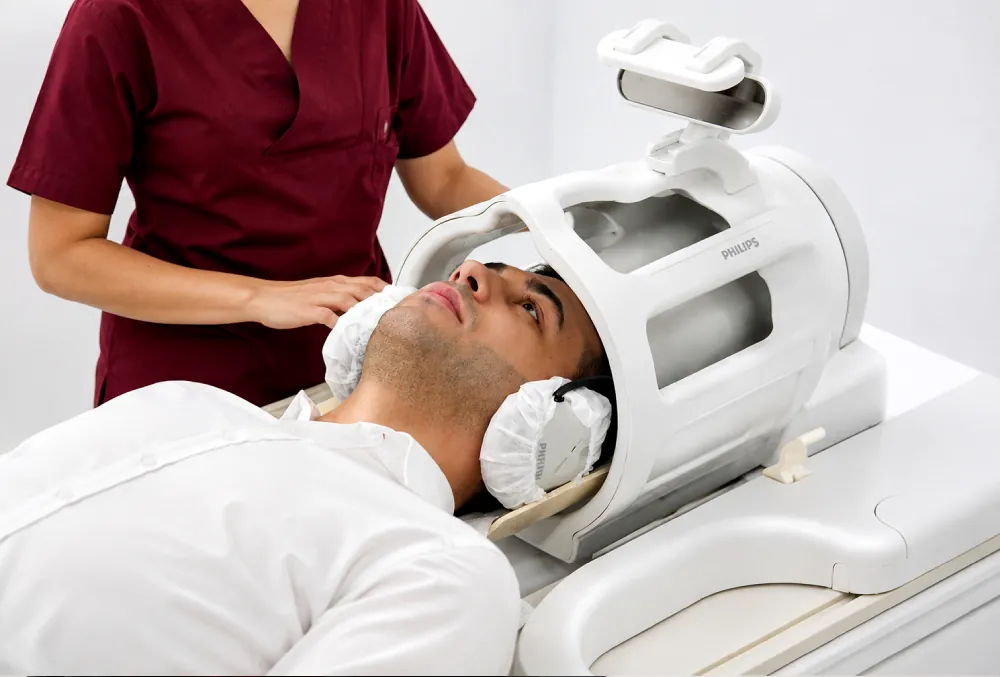
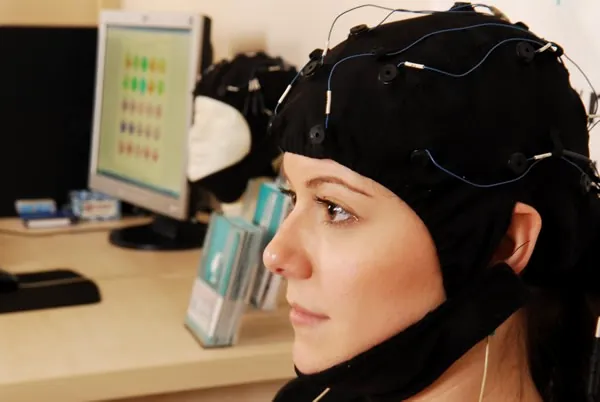
QEEG (quantitative EEG) brain mapping is a technique that analyses the brain's electrical activity, recorded from the scalp, and shows how waves of different frequencies are distributed across the brain. This gives indirect information about how the brain is functioning. Repeated after treatment, QEEG can show the positive changes that treatment has achieved.
How it works
The brain's biological processes ultimately produce bioelectrical activity, and QEEG measures this activity. Comparing recordings taken before and after treatment makes it possible to see, through the brain's bioelectrical activity, how brain activity changes with treatment.
The diagnosis is made by the specialist through a clinical assessment. QEEG adds objective information about brain activity that supports this assessment and helps in planning and monitoring treatment.
Why measuring brain function matters
Many mental disorders are disorders of the brain, so understanding and tracking brain function is essential for effective treatment. Being able to measure brain function in children, adolescents and adults, and to use those measurements to guide treatment, has long been a goal in psychiatry.
In depression in particular, tracking biological changes, not only psychological and social ones, is especially valuable, and it is a priority in treatment-resistant cases.
Where QEEG is used
Scientific research has confirmed a biological dimension to many psychiatric disorders, most notably depression and panic disorder. Laboratory studies have linked these conditions to biochemical imbalances in particular areas of the brain.
Understanding this link in detail is difficult. The human brain is extraordinarily complex and largely "inaccessible": it cannot be viewed directly, and unlike other organs, a piece of it cannot be removed for examination. Researchers therefore depend on techniques that give indirect information about brain function. QEEG is one of them and plays a major role in diagnosing and treating psychological disorders.
Quantitative pharmaco-EEG: checking a medication's effect on the brain
Psychotropic medications are chemical substances that act on the brain, and they should reach "the right person, at the right time, in the right way." Seeing how a medication actually affects brain activity is clinically very important, especially for a medication that may be used for years.
NPİSTANBUL Hospital's Quantitative Pharmaco-EEG system can give preliminary information on whether a medication has an antidepressant, antipsychotic, anxiolytic (anxiety-reducing) or cognition-enhancing effect in the brain. This information may not be 100 percent certain, but it increases both sensitivity and specificity.
Who it may help
Pharmaco-EEG serves as a supporting method in many neuropsychiatric conditions, including:
- Depression
- Panic disorder
- Memory loss
- Dementia
- Alcoholism
- Attention deficit disorder
- Attention-deficit/hyperactivity disorder (ADHD)
In children and adolescents, the test can also provide meaningful preliminary information about medications that require a special prescription, such as Ritalin.
What the evidence says
The American Academy of Neurology and the American Clinical Neurophysiology Society regard QEEG as investigational for depression, attention disorders and other psychiatric conditions. At NPİSTANBUL it is used only alongside a clinical assessment, never to make a diagnosis.
Research use, not an established indication: Depression, ADHD in children and adults
Programmes that include it
- Comprehensive psychiatric assessment where indicated