

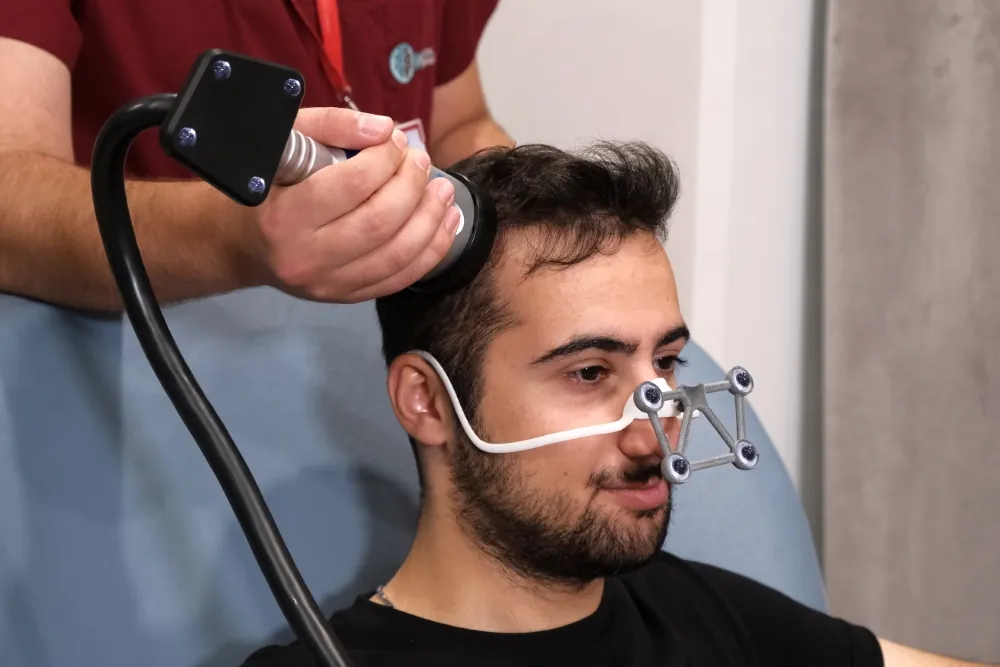
Transcranial pulse stimulation (TPS) is a non-invasive, non-surgical method that aims to support brain functions involved in psychiatric and neurological conditions. It does not replace psychiatric treatment. When a physician considers it appropriate, TPS is added as a complementary step alongside the treatment a patient is already receiving.
Why brain function matters in psychiatric care
Psychiatric difficulties involve more than emotions; they are closely tied to how the brain functions. Mood, attention, motivation, stress tolerance and mental flexibility all depend on different brain regions and on how well those regions communicate.
Some people improve more slowly than hoped, or not enough, despite medication and psychotherapy. In these situations, supportive methods aimed at brain function may be discussed, and TPS is one option a psychiatrist may evaluate. Its role is not to remove symptoms by itself but to form part of a holistic plan that supports the brain's natural regulatory and adaptive processes.
Who it may help
TPS is never used as a stand-alone treatment. It is CE-marked as an add-on treatment for Alzheimer's disease, which is also where the scientific evidence is strongest, although it is still limited. After a joint evaluation by psychiatry and neurology specialists, it may be considered as a supportive approach:
- Alzheimer's disease: particularly in the early and middle stages, to help support cognitive functions as part of a holistic plan agreed by neurology and psychiatry specialists.
- Other conditions: TPS is also being studied in depression, mild cognitive impairment and other neuropsychiatric conditions. For these uses it is still experimental and not an established treatment; your specialist can explain whether it could be appropriate for you.
Whether TPS suits a particular patient, and how treatment is planned, is decided only after a detailed assessment by psychiatry and neurology specialists.
What to expect during a session
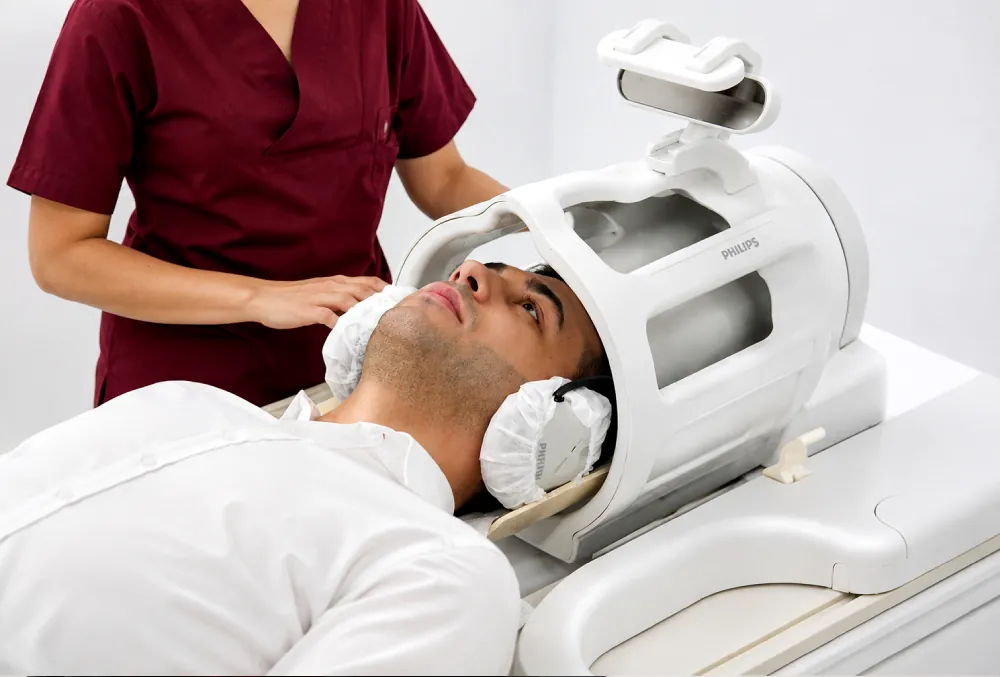
TPS takes place in a clinical setting, with patient comfort as a priority. The psychiatrist plans the course of treatment individually after the initial evaluation.
- No surgery: TPS is applied from outside the head, with no incisions.
- No anaesthesia: you remain awake throughout and no anaesthetic is needed.
- A comfortable position: the session is carried out in a comfortable environment.
- A dedicated head device: it delivers short, controlled stimuli.
- Short sessions: each one usually lasts about 20–30 minutes.
- Straight back to daily life: no rest period or hospital stay is required afterwards.
Your condition is monitored throughout, and the physician can revise the plan if needed.
How long does a course of TPS take?
There is no single standard duration. The length of treatment depends on the chosen protocol and the person's clinical condition.
- Session length: generally 20–30 minutes.
- Number of sessions: set individually by the psychiatry specialist.
- Overall course: for some people the planned sessions are completed within a few weeks; in other cases, additional sessions may be scheduled.
The schedule is tailored to each person's complaints, current treatments and response.
Is TPS safe?
Because it is non-invasive and requires no surgery, TPS is generally regarded as a safe application. A specialist physician plans each course carefully, and it is delivered in a clinical setting. Scientific studies and clinical experience indicate that most patients tolerate it well.
Possible side effects
Some people notice mild, temporary effects after a session. The ones reported most often are:
- Mild headache
- Brief tenderness where the device was applied
- A mild feeling of tiredness
These usually settle on their own within a short time and do not interfere with daily life.
When extra caution is needed
Like any treatment, TPS is not right for everyone. It may be unsuitable, or a more detailed evaluation is required beforehand, for people with:
- A history of epilepsy or seizures
- Metal implants or devices in the head, such as aneurysm clips, shunts or brain stimulators
- A pacemaker or another implanted electronic device
- A blood clotting disorder, or treatment with blood-thinning medication
- A brain tumour
- Recent corticosteroid treatment
- Pregnancy
- Certain other neurological diseases
For this reason, the specialist reviews each person's medical history and current condition in detail before TPS begins.
TPS at NPİSTANBUL
At NPİSTANBUL Hospital, psychiatry and neurology specialists plan TPS together. Before treatment starts, they review the patient's psychiatric history, current treatments and overall clinical picture.
TPS forms part of a holistic, personalised treatment plan that also includes the patient's existing medication, psychotherapy and other supportive approaches. Rather than applying one standard protocol to everyone, the team chooses the approach that best fits each person's clinical needs.
Patients are followed up regularly, and the plan can be adjusted as their needs change. At every stage, the specialist physician's evaluation determines whether TPS remains suitable and should continue. All TPS treatment at NPİSTANBUL is delivered within a multidisciplinary neuropsychiatric approach and in line with scientific and ethical principles.
What the evidence says
TPS is a newer method. Early studies are promising, but the evidence is still limited. It is used alongside, not instead of, standard dementia care.
Research use, not an established indication: Depression
Limited evidence, not an established indication: Dementia and memory problems